Wine knowledge
What is raspberry wine?
~7 min read · 18+ · Please drink responsibly · На български
Short answer
Raspberry wine is wine fermented from raspberries instead of grapes. Done properly, the fruit is the entire fermentable base — no water, no grape spirit, no added flavouring — and the result is dry, tart and closer to a light red than to a liqueur. Most of what is sold as "raspberry wine" is not made this way.
What raspberry wine actually is
Wine is fermented fruit sugar. Grapes are the default because they carry the right sugar, acid and water balance in a single fruit, but nothing about fermentation requires them. Raspberry wine is made the same way: crush the fruit, ferment the sugar, age the result.
The complication is that raspberries are not grapes. They carry less sugar and considerably more acid, and they give up colour and aroma far more readily. A raspberry ferment that is handled like a grape ferment produces something thin and harsh. Handled for what it is, it produces a wine with a startling nose and an acid backbone most fruit wines never develop.
That acid is the whole argument. It is why a properly made raspberry wine finishes dry and clean instead of cloying, and it is why altitude matters — cooler mountain fruit holds its acidity where valley fruit loses it.
The category problem: three different things share one name
Walk into a supermarket in most of Europe and the bottle labelled raspberry wine is likely to be one of three quite different products, and the label rarely tells you which.
Aromatised grape wine. A cheap grape base with raspberry flavouring added. It is the most common version by volume, it is legal, and it is not fruit wine in any meaningful sense — the raspberry never fermented.
Fortified or watered fruit wine. Real raspberries, but the must is diluted with water to stretch it and the ferment is stopped with grape spirit to leave residual sugar. Sweet, simple, and a long way from dry.
Fully fermented fruit wine. The fruit is the entire base. Nothing is added to stretch it, nothing is added to stop it. This is the smallest category and the only one where the character of the fruit and its growing site actually reaches the glass.
G. Filipoff sits in the third. The 100% Raspberry Wine ferments entirely from fresh raspberries, with no added water and no grape spirit.
How it is made
The raspberries are hand-picked from mountain plantings at roughly 800 metres in the Rhodope Mountains of southern Bulgaria, near Asen's Fortress above Asenovgrad. Hand-picking is not romanticism here: raspberries bruise if you look at them hard, and bruised fruit oxidises before it reaches the cellar.
The fruit is crushed and fermented on its own sugars. Because raspberry must is lower in sugar than grape must, the finished alcohol lands around 10.5% rather than the 13–14% typical of red wine — a consequence of the fruit, not a choice to make something lighter.
After fermentation the wine is settled and matured before bottling. The colour it arrives with is light ruby, and it comes from the fruit alone; nothing is added to deepen it.
Raspberry wine and grape wine, compared honestly
Alcohol. Raspberry wine sits lower — around 10.5% for the 100% bottling, 11.5% for the Mavrud blend — against 12–14% for most still grape wine.
Acidity. Higher, and more obviously so. It reads as freshness rather than sourness when the wine is balanced.
Tannin. Effectively absent in a pure raspberry wine. Raspberries have no seeds and skins of the kind that give red wine its grip. This is why the Mavrud blend exists: the grape contributes the structure the fruit cannot.
Ageing. Grape wine is built to age for years or decades. Raspberry wine is built around primary fruit aroma, which fades. Drink it young.
At the table. A pure raspberry wine works where a light red or a rosé would — aperitif, soft cheeses, dark chocolate, fruit desserts. The Mavrud blend, with real tannic structure, handles lamb, game, mature cheeses and mushroom dishes.
The Bulgarian angle: raspberry and Mavrud
Mavrud is Bulgaria's signature indigenous red grape, grown in the Thracian Lowlands — deeply coloured, firmly tannic, and grown almost nowhere else. Blending it with Rhodope raspberry produces something that could not have come from anywhere but Bulgaria: the fruit's aromatics carried on the grape's frame.
It is also the most useful bottle in the range for anyone sceptical of fruit wine, because it answers the objection directly. The structure is there. It behaves like a red at the table.
Serving it
Serve the 100% Raspberry Wine lightly chilled, 10–12 °C. Too cold and the aromatics shut down; at room temperature the alcohol pushes forward and the fruit flattens.
Serve Raspberry & Mavrud warmer, 14–16 °C, as you would a medium-bodied red.
Use an ordinary wine glass, not a liqueur glass. The aroma is the best thing raspberry wine has, and it needs room.
Frequently asked
Is raspberry wine actually wine?
It is fermented fruit, which is what wine is. In EU labelling terms, "wine" without qualification means grape wine, so a raspberry wine is labelled as fruit wine — a naming rule, not a judgement on how it is made.
How much alcohol does raspberry wine have?
G. Filipoff's 100% Raspberry Wine is around 10.5% ABV and the Raspberry & Mavrud blend around 11.5% — lower than most grape wine, because raspberries carry less fermentable sugar than grapes.
Is raspberry wine sweet?
It does not have to be, and this range is not. The G. Filipoff wines are dry to off-dry with pronounced fruit acidity. The category's reputation for sweetness comes from products where fermentation is deliberately stopped early to leave residual sugar.
What does raspberry wine taste like?
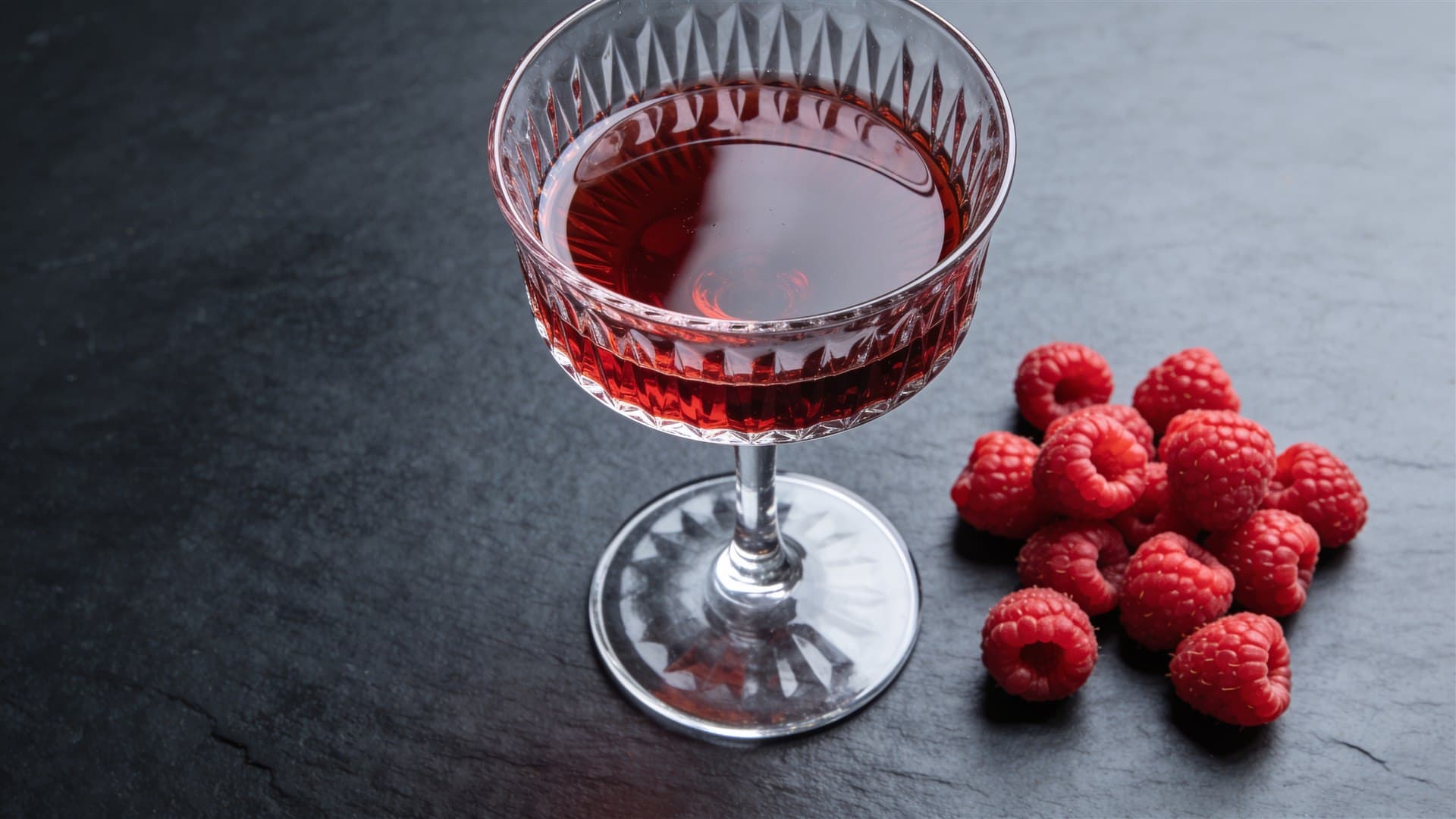
Light ruby in the glass, with an intense fresh-raspberry nose. On the palate, tart red fruit with a clean, dry finish and almost no tannin — structurally closer to a light red or a dry rosé than to a liqueur.
What food goes with raspberry wine?
The pure raspberry wine works as an aperitif, and with dark chocolate, soft cheeses and fruit desserts. The Raspberry & Mavrud blend has the tannin to handle lamb, game, mature cheeses and mushroom dishes.
Should raspberry wine be aged?
No. Its appeal is primary fruit aroma, which fades with time rather than developing into something else. Drink it within a year or two of release.
Where can I buy Bulgarian raspberry wine?
G. Filipoff sells online for delivery inside Bulgaria. Outside Bulgaria, supply runs through importers and distributors — trade enquiries are welcome.